
The Hidden Cost of Running Your Clinic on Spreadsheets and Sticky Notes
Tue, August 25, 2026 · 3 min read
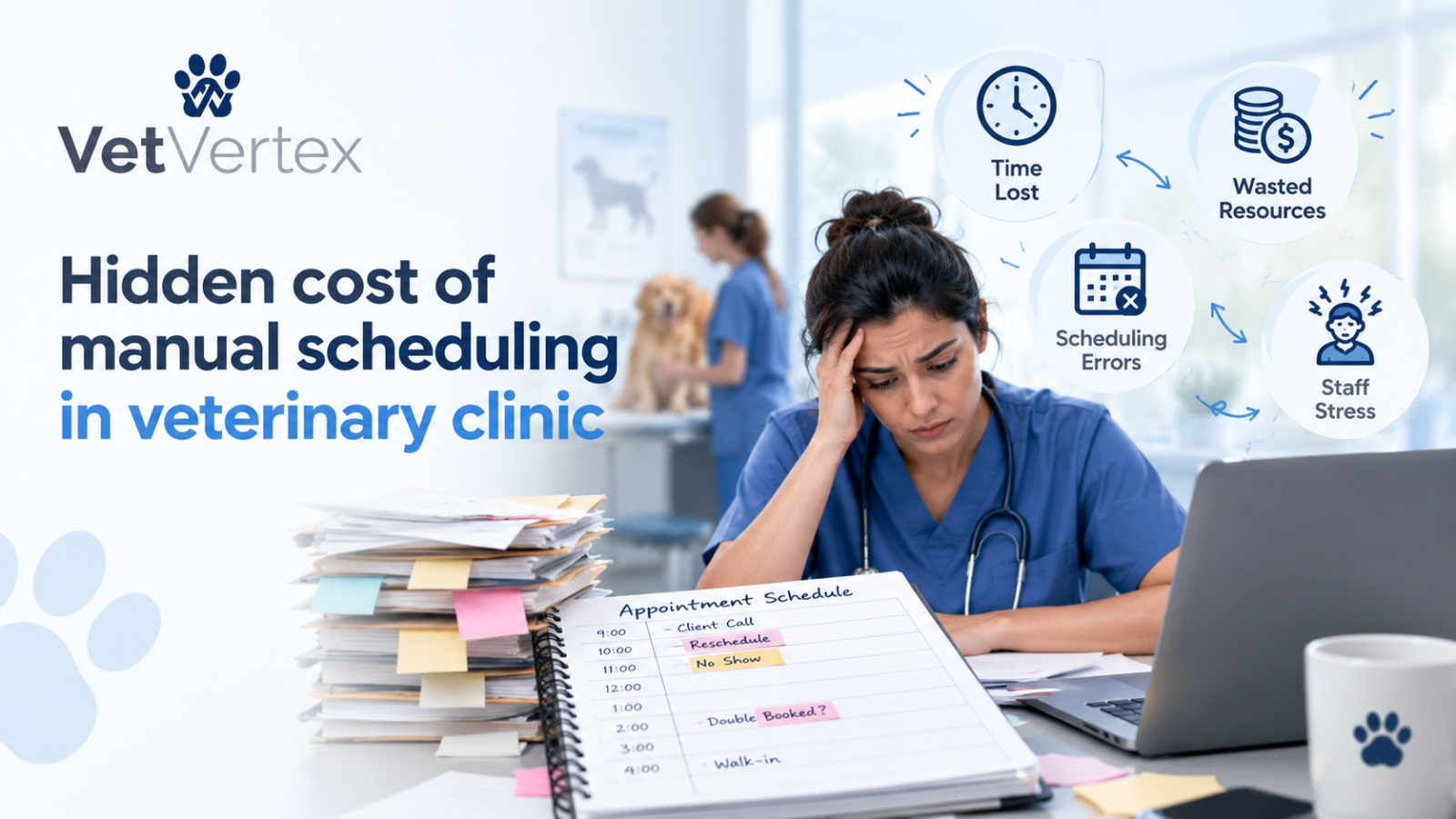
If you're a clinic owner or veterinarian, you didn't get into this profession because you love administrative work. You got into it because you love animals and the people who bring them to you. Yet somewhere between the first patient of the day and the last chart note at night, most veterinary professionals find themselves buried in scheduling conflicts, missed follow-ups, and paperwork that never seems to end.
Here's the uncomfortable truth: the way most clinics manage their day-to-day operations is quietly costing them time, money, and peace of mind.
The Real Price of "Good Enough" Systems
Many clinics still run on a patchwork of tools — a paper appointment book, a separate spreadsheet for inventory, sticky notes for callback reminders, and a billing system that doesn't talk to any of it. Individually, each of these feels manageable. Together, they create friction that adds up fast.
Missed appointments and no-shows. Without automated reminders, clinics typically see no-show rates climb well above what's necessary. Each empty slot isn't just lost revenue for that hour — it's a pet that didn't get the care it needed on schedule.
Double-booked exam rooms. When scheduling lives in someone's head or a shared spreadsheet, conflicts happen. Front desk staff spend valuable time untangling overlaps instead of greeting clients.
Inventory surprises. Running out of a critical vaccine or medication mid-week doesn't just delay care — it damages the trust clients place in your clinic's reliability.
Staff burnout. Veterinary teams already carry heavy emotional and physical workloads. Add in disorganized administrative processes, and you get a recipe for turnover — one of the most expensive problems any clinic can face.
Why This Matters More Than It Used To
Client expectations have shifted. Pet owners today are used to booking a restaurant table, a haircut, or a doctor's appointment online in under a minute. When your clinic still requires a phone call during business hours to schedule a visit, you're not just creating friction — you're quietly pushing clients toward competitors who make it easier.
At the same time, the veterinary industry is dealing with a well-documented staffing shortage. Every hour your team spends on avoidable administrative work is an hour taken away from patient care — the part of the job that actually requires a trained professional.
What Good Clinic Management Actually Looks Like
The clinics that run smoothest share a few common traits, regardless of their size:
- Centralized scheduling that staff, vets, and clients can all see and interact with in real time, reducing double-bookings and no-shows through automated reminders.
- Integrated medical records so any team member can pull up a patient's history instantly, without digging through paper files or disconnected systems.
- Inventory tracking that flags low stock before it becomes an emergency.
- Client communication tools that handle routine follow-ups automatically, freeing staff to focus on cases that need a human touch.
None of this requires your team to become tech experts. It requires the right system doing the unglamorous work in the background, so your clinic's time goes where it matters most — the exam room.
Where to Start
You don't need to overhaul everything at once. Most clinics that make this shift start by tackling their single biggest pain point — usually scheduling or client communication — and build from there.
If you're curious what this could look like for your clinic specifically, we'd be glad to walk you through it. No pressure, just a conversation about where your current process is costing you the most.